Also from this desk

Further down
than an app is allowed to go

SonoLune is an app, and an app has limits. It can lay a warm tint over your screen, but it cannot make the screen give off less light, and it cannot stop another app from waking you. These two can, because they work inside Android itself. Both need a rooted phone. Both are open source, and both are on GitHub.

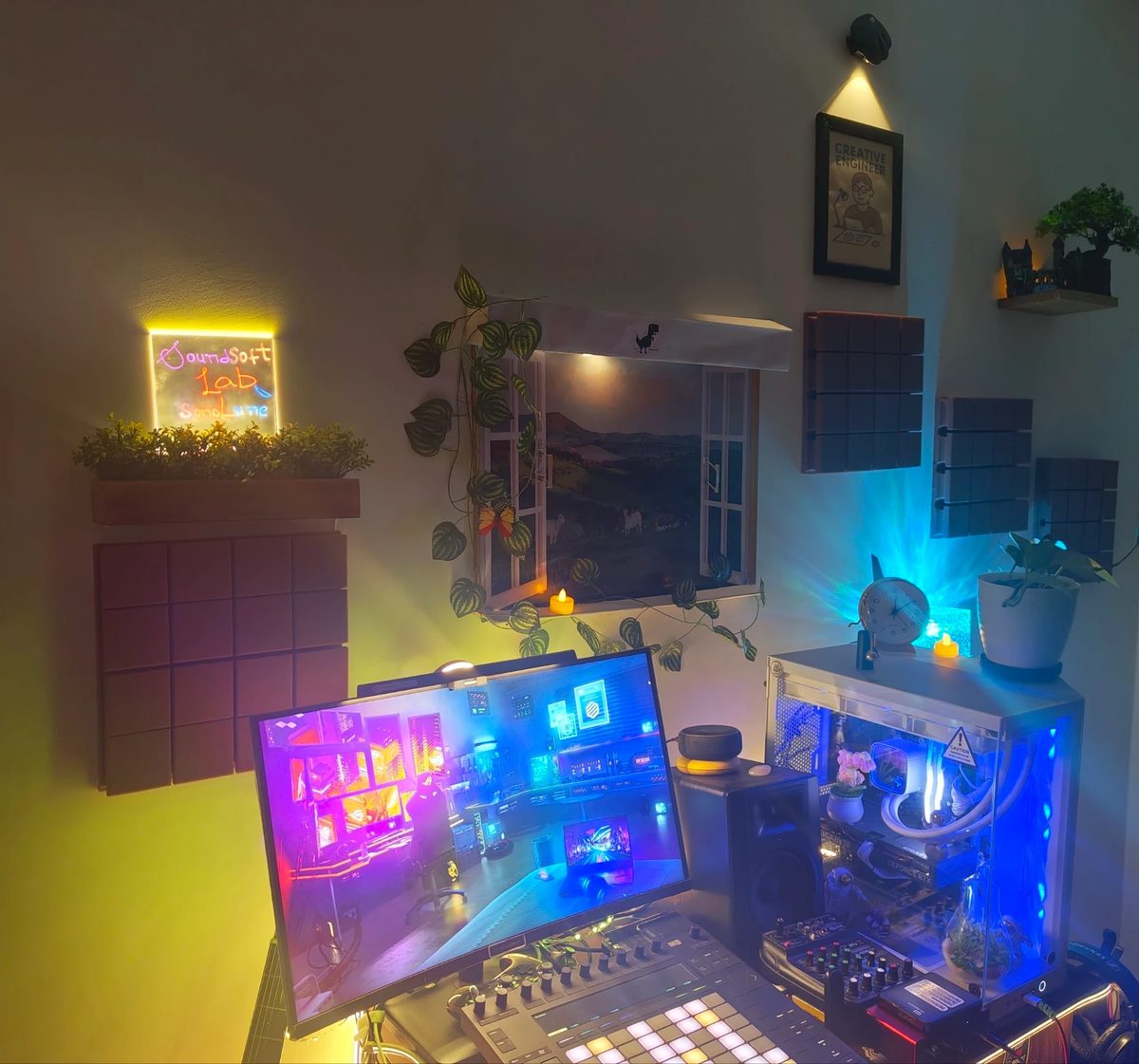
The desk in Kashmir: a lit SoundSoft Lab and SonoLune sign above a planter, a painted window framed by vines, acoustic panels on the wall, a curved display, an Ableton Push, a small mixer, a studio monitor and a desktop computer
● The same desk as on the About page. Kashmir, with the sign lit.
Magisk · KernelSU · APatch module

Lune Bridge

Candlelight on the screen, not over it.

Android can already warm your screen and dim it past the brightness slider, inside its own display pipeline. It just stops early, because the limits are fixed in the system. Lune Bridge moves them: warmth down to 1700 K with the colour ramp refitted to match, and dimming below the panel's own minimum.

There is a mode for screens that flicker at low brightness, and a second half, Quiet Field, that stops the apps you choose from waking your screen or taking it over.

It also works with SonoLune, from version 2.4.4. Switch it on in SonoLune, and Warm Light moves your phone's own Night Light, Screen Brightness goes darker than its usual minimum, and Quiet Field keeps the apps you choose from waking your screen. Once the module is installed, SonoLune's Light room shows a line that takes you straight to that switch.

  • Works with SonoLune 2.4.4+
  • Android 9 and up
  • Magisk, KernelSU or APatch
  • No Xposed
  • GPL-3.0
LSPosed module · alpha

Lost Xposed

The settings Android keeps to itself.

Your phone can do far more than its settings screen admits. Lost Xposed reopens some of those decisions: a status bar clock you compose from the pieces you want, density, font scale and refresh rate set per app, and notification rules that stop a message before it is ever posted.

It is alpha, and it says so. So far it has been seen working on one phone. Every feature carries what has actually been tested, in the app and in the README, so you know which parts are proven before you rely on them.

  • Root + LSPosed or Vector
  • Alpha
  • GPL-3.0

A phone screen is built for daylight, and it stays that way at three in the morning. Adding darkness is not the same as giving off less light, and your eyes can tell.

You do not need either for SonoLune SonoLune does everything it promises on an ordinary phone, with nothing rooted and nothing else installed. If "rooted" means nothing to you, you can safely ignore this page.
Why the source is open Both are GPL-3.0. Anything that reaches this far into a phone should let you read exactly what it does, line by line.

Everything is on GitHub, under uraniam9.

If either one helped you, a coffee is a kind way to say so.

Buy me a coffee A coffee does not unlock anything in SonoLune. Supporting SonoLune happens inside the app.